Showing posts with label New Findings. Show all posts

Wednesday, May 18, 2016

Make hay while the sun shines!


A solar plant Photo Vijay Soneji. .


D.D. Kosambi’s essays aptly titled “Adventures into the Unknown” reveal how the scientist pushed for solar power more than half-a-century ago when the world was busy playing with atoms

Believe it or not, India has set an ambitious target of adding 100 gigawatts of solar power by 2022. Before the Paris Climate Summit, it had pledged that by 2032, it would increase its share of non-fossil fuels to 40 per cent of the total power generation capacity. These decisions have come many years after India under the leadership of Prime Minister Manmohan Singh had signed the controversial civil nuclear agreement with the United States with a view to meet its energy requirements. So, clearly, solar energy is the flavour of the season.
This reminds me that there was a time in the 1950s and early 1960s when those who advocated solar energy could be pitted against the scientific and technological establishment of the country and viewed with suspicion. D. D. Kosambi, a polymath genius who made seminal contributions in pure mathematics, quantitative numismatics, Sanskrit studies and the study of ancient Indian history and culture, was one such individual who came in direct conflict with the Department of Atomic Energy because of his strong views against the use of nuclear energy as he favoured solar energy in its place. He also had to cross swords with Homi Jehangir Bhabha, widely recognised as the father of the Indian atomic energy programme.
It was Bhabha who had invited Kosambi in 1945 to join the recently established Tata Institute of Fundamental Research (TIFR) and help set up the School of Mathematics. In the initial years their relations were very cordial (as it is clear from Kosambi’s scribble on the newspaper cartoon that he forwarded to Bhabha) but soon differences cropped up as Kosambi emphasised that a country like India that received sunshine in abundance must place greater reliance on solar energy. That he was a die-hard Marxist, who was very active in the international peace movement, did not help matters.
In the 1950s, the Department of Atomic Energy had started funding TIFR and Kosambi’s continuance there became untenable. Moreover, the fact that he had also emerged as a major historian who had brought about a paradigmatic shift in the study of ancient Indian society also made his fellow scientists view him with suspicion as his non-scientific interests were not considered compatible with his senior position in TIFR.
Recently, Three Essays Collective brought out a collection of Kosambi’s essays titled “Adventures into the Unknown”. Ram Ramaswamy, Professor of Physics at the Jawaharlal Nehru University, has edited this volume that contains hitherto unpublished material. In his preface, Ramaswamy informs that in 1960 Kosambi gave a talk to the Rotary Club of Poona and the text has been published here as “Atomic Energy for India”. In this essay, he underlines the need for research and development in the field of solar energy, a need to which our government seems to have woken up only recently. “Solar energy,” Kosambi says, “is not something that any villager can convert for use with his own unaided efforts, at a negligible personal expenditure, charkha style. It means good science and first-rate technology whose results must be made available to the individual user.” Nuclear disasters like Chernobyl and Fukushima have proved visionaries like Kosambi right.
In 2013, Prof. Meera Kosambi, the sociologist daughter of D. D. Kosambi, edited a book that contained writings of her as well as on her father. Titled “Unsettling the Past”, it was published by Permanent Black. It also contains two other essays of Kosambi on the question of solar energy that were written between 1957 and 1964. In “Sun or Atom?”, Kosambi draws our attention to the fact that scientific and technological research in the developed world is inextricably tied to the military-industrial complex and therefore solar energy was being ignored.
He says, “The research is of no use for war purposes. That is why it attracts some of us, but does not attract those who control the funds.” In another essay “Solar Energy for Underdeveloped Areas”, Kosambi cites another reason why significant technological advances were not being made to solve the problem of storage of solar energy: “The lands where technology is most advanced are just those which have very little sunlight as compared to India and Africa and where conventional forms of energy are highly developed.” However, he was quite confident that ultimately solar energy would become affordable and gave the example of aluminium. “But extracting this metal was a most costly process and aluminium was, a century ago, costlier than gold. Technology has made the metal cheap…”
As India finally turns to solar energy, it is very refreshing to read these essays that were written more than half-a-century ago.
The writer is a senior literary critic

Sunday, April 3, 2016

Reality and Myth

by Ram Ramaswamy
Some years ago, a friend of mine at JNU proudly told me about a book that he had picked up from the library “sale”, a book that had once belonged to D D Kosambi (DDK). Apparently it had not been checked out for years, and was therefore deemed unworthy of staying on in the library, as if finding a place on the library shelf was just some sort of evolutionary game, a survival of the fittest and no more…
The JNU had, at some point in time, acquired Kosambi’s personal collection of books, that was, according to Mr R P Nene (DDK’s friend and assistant, in an interview in June 1985) “sold by his family after his death to the JNU at the cost of Rs. 75, 000.” Details of how this happened are not too clear- Kosambi died in 1966, the JNU was founded in 1969, and the initial seed of the JNU library was that of the “prestigious Indian School of International Studies which was later merged with Jawaharlal Nehru University.” Our website goes on to say that the “JNU Library is a depository of all Govt. publications and publications of some important International Organisations like WHO, European Union, United Nations and its allied agencies etc. The Central Library is knowledge hub of Jawaharlal Nehru University, It provides comprehensive access to books, journals, theses and dissertations, reports, surveys covering diverse disciplines.”
09d8db678a716ec2ebc8487af584ae82The amount paid suggests that the books were viewed as very valuable: Rs 75K in the late 1960’s was a huge sum of money. And given that, it was quite amazing that the collection had not been kept as one, but the books had apparently been shelved by subject (!) and were then like any other books, and so subject to the periodic culling that most libraries undertake to clear shelves and make space for new books. (In some sense I was not too surprised, having myself bought a book that had been owned by AnandaKentish Coomaraswamy and that had somehow made its way to Princeton. The initials AKC were pencilled in on the first page, but apart from the bookplate, there was little else to show that it had been his. Unfortunately that book is no longer with me, and in hindsight, I think that when libraries acquire collections from scholars of note, they should make some attempt to keep the collections intact. Mercifully the JNU has done that now with more recent acquisitions..).
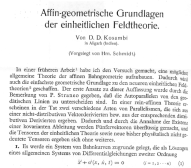
Untitled 5Nevertheless, a chance conversation shortly thereafter on the vagaries of libraries and the nature of intellectual inheritances started me off on my exploration of Kosambi and his mathematics. The idea was, on the face of, a simple one. What was the extent of Kosambi’s mathematical contributions compared to, say, his contributions to history or numismatics. How would the math stack up?  Having been in TIFR before I came to JNU, I had also heard of how he travelled from Pune to Bombay every day on the Deccan Queen, how he was fired from TIFR, etc. etc. But I also found out that precious little was known of DDK’s other life by the historians. That the mathematics was too different and far too difficult is all too true, but still.
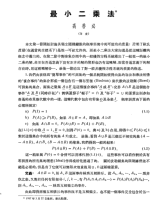
Untitled 2To start with, I thought it would be good to put together his life mathematical, namely all his math and stats papers. Much of that was on the web, except that it was in bits and pieces, and all over the place. No single bibliography was accurate, and no matter where I looked, there were gaps. Many of the Indian journals where he published were not (and still are not) digitized. Some of the names that were given in the existing lists were incomplete or incorrect, many papers were missing. The Rendiconti della Reale Accademia Nazionale dei Lincei or the  Sitzungsberichten der Preussische Akademie der Wissenschaften, Physikalisch-mathematische klassewere both uncommon journals that were impossible to locate anywhere in India, for instance. I went to the Ramanujan Institute in Chennai in late 2009, looking for copies of the Journal of the Indian Mathematical Society and Mathematics Student where DDK had published a lot of his work in the 1930’s and 1940’s. It’s too depressing to recount that visit… Nothing could be located, and I left empty-handed after a wasted morning.
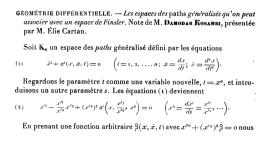
Untitled 4In 2010, though, I was visiting professor at the University of Tokyo for a month, and luckily, the Komaba campus where I was located, housed the mathematics department and more importantly, its library. It took a few hours spread out over several days, but before long, I not only had the bulk of DDK’s papers in photocopy or in digital form, but I also discovered, via MathSciNet, of DDK’s nom de plume S. Ducray, under which name he had written four papers. I also had access to the reviews of many of his mathematical papers by others, and could see many very famous names among the reviewers. As an aside, I should add that the library of Tokyo University is one of the few that have the complete sets of Journal of the Indian Mathematical Society and Mathematics Student, including the volumes published during the World War II years, when Japan and India were on different sides…

Wednesday, September 23, 2015

Researchers, activists bat for Mhatoba shrine status quo


Ananya Dutta,TNN | Sep 21, 2015, 03.00 AM IST

PUNE: The shrine dedicated to Mhatoba on top of Vetal Tekdi is an important cultural and historical site and should be maintained as it is, instead of obscuring it with a modern structure, feel experts and environmentalists.

"The Mhatoba shrine is important from an archaeological point of view as well as in terms of the folk and cult geography of Pune. Building a modern-style temple on the site would erase the actual ritual association that pastoral communities had with the shrine," said Indologist and researcher Saili K Palande Datar.

As far back as 1962, historian and polymath D D Kosambi had commented on the importance of the site in mapping the cult of Mhatoba. In his book 'Myth and Reality — Studies in the Formation of Indian Culture', Kosambi terms this shrine on the hilltop as "the original locus" of the Mhatoba of Kothrud village. According to him, it came here along with "herdsmen" from Wakad, where there is a temple to Mhatoba and his consort — a structure older than 1678AD.

Kosambi also found prehistoric artefacts in the vicinity of the shrine, including what may be megaliths (large stones) from an ancient burial site.

"I have been visiting the site from the 1960s. It used to be as Kosambi has described it, 'a red-daubed boulder' minimally covered with a tin shed. It was revered by Dhangar and Wadar communities, who would offer a sacrifice to the deity when passing through Pune," said environmental activist Vijay Paranjpye.

Palande Datar said the communities that have historical associations with the shrine, such as the Dhangars, don't even pass through the area anymore. "Altering the structure would be an appropriation of their cultural symbols and amount to an erasure of history. Introducing something new will damage the cultural significance of the site," she said.

She said that several hills in and around Pune are associated with similar folk and tribal deities, many of them closely connected with the conservation of biodiversity. The Waghjai and Taljai goddesses on Taljai Tekdi for instance were associated with their own sacred groves on the hill.

"Both these deities are Mother Goddesses worshipped by forest-dwelling communities. Over the years, the land-use pattern of the hill has changed, but they were originally protectors of its environment," she said.

A key aspect of retaining the shrines in their original form is that many of them were not meant to be enclosed by any artificial structure. Kosambi had noted that the "primitive origin and nature" of the cults was shown by the injunction that the stone must be open to the sky. He saw it as a sign that the cults date back to a period "before houses were in fashion, and when the 'village' was on the move".

"The shrine on top of Vetal Tekdi, along with its natural precincts, is a very important cultural heritage site. The shrine as I have known it all these years was always open to the skies. It should be maintained as it is, without disturbing its natural precincts," Paranjpye said.

Monday, June 4, 2012

Climate Change Skeptics, Here’s a Lesson from Harappan Extinction

Source:  Forbes
Many hypotheses have been floated after many, many years of work on what actually led to the collapse of Harappa, the largest Bronze Age Civilization and the earliest urban civilization that India has seen, some 5200 to 4500 years ago. Some said the invading Aryans destroyed it; others proposed that there were massive earthquakes which ruined the cities. Then there were some who suggested that rivers shifted course and left the cities on their banks to decay.

Now, a group of researchers, from mathematicians to geologists to archaeologists, report today in Proceedings of the National Academy of Sciences, there’s conclusive evidence that it was climate change which led to the extinction of the Harappan civilization.
“Our work shows that none of these is likely to be true. Rather, it was the shifting pattern of the monsoon, which receded towards the north and the east of the Indian continent which led to a drying up of the land in which the Harappans had made their civilisation, and this led to its collapse,” says Ronojoy Adhikari, a mathematician at The Institute of Mathematical Sciences in Chennai.

Data analysis from multiples sources show that it was the gradual decrease in flood intensity that had encouraged urbanization around 4500 BC. However, further decline in monsoon precipitation made both inundation and rain-based farming difficult. For a long while it was believed that a large glacier-fed Himalayan river, which some have identified as the “mythical Saraswati” river, watered the Harappan heartland. The new research shows that only monsoonal-fed rivers were active in those days. And as the monsoon weakened, these rivers dried or became seasonal, impacting “habitability” along their courses.

Unlike the Egyptian and Mesopotamian civilizations, regions which were surrounded by deserts and hence restricted people’s movement forcing them to adapt and take action, harsh climate conditions led Harappan people to find an escape route. They moved eastwards, to the moister monsoon regions of upper Punjab, Haryana and Uttar Pradesh, says Liviu Giosan, a geologist at the Woods Hole Oceanographic Institution in Massachusetts.
So, does this finding offer any lesson to the climate change skeptics?

Of course it does, say both Adhikari and Giosan.

Global warming is leading to a change in the glaciers in the Himalayas. It is also conjectured that the global warming will increase the intensity of the monsoons. This will lead to much greater floods in the monsoon-fed rivers of the Indo-Gangetic plain. Our
society may have to find out innovative technological measures to deal with such a situation, and it is in this context, that we consider the findings in our paper a “lesson from the past”, they say.

This result is “instructive”. As was the case in the Egyptian and Mesopotamian civilizations, people today hardly have any possibility to “move”. National borders and densely populated regions don’t provide the option of finding an escape route. Giosan, who researched inKarachi (unfortunately under protection) from 2003 to 2009, says the floods of 2010 inPakistan are a warning sign. “Monsoon is the life blood of India and other countries in the region but we don’t understand how it’s going to increase or decrease due to changing climate. The entire system of irrigation in this region is under calibrated,” he cautions.

However, there’s one more reason why this study is important. This work brings in several independent sources of data – sediments, fluvial patterns and archaelogical records – to provide compelling support for the climate change hypothesis. “The great pioneer of such ‘combined methods’ was D. D. Kosambi [he wrote a popular book called ‘Combined Methods in Indology’] and I see our work as firmly embedded in that paradigm. This is the real strength of this work,” says Adhikari.

For some of the earlier work of Adhikari and researchers from the Tata Institute of Fundamental Research here’s a video:


Tuesday, May 3, 2011

When did early humans reach India?

When did early humans reach India? | Down To Earth
When did early humans reach India?
0 Comments
Author(s): Tiasa Adhya
Issue: May 15, 2011

Stone tools suggest a million years ago, previous assumption was 0.5 million years ago

imagePappu and her research team started studying the site in Tamil Nadu in 1999 (Courtesy: Shanti Pappu)EARLY humans arrived in India from Africa more than a million years ago, indicate newly discovered stone tools. The discovery overturns the earlier assumption that our ancestors reached India about half a million years ago.

A research team led by Shanti Pappu of non-profit Sharma Centre for Heritage Education in Chennai discovered 3,528 stone tools at a prehistoric site in Attirampakkam in the Kortallayar river basin of Tamil Nadu. The tools fall into a class of artefacts called Acheulian tools that scientists believe were first created by Homo erectus— ancestors of modern humans—in Africa more than 1.6 million years ago. The Acheulian tools largely include handaxes and cleavers.

The conclusion of Pappu’s study was earlier voiced by Robin Dennell of University of Sheffield in England in a commentary published in 2005 in the journal Nature.

The Old Stone Age, or Palaeolithic Age, is divided into three periods— Lower Palaeolithic, Middle Palaeolithic and Upper Palaeolithic. Each period is characterised by typical stone tool assemblages. The Acheulian is a phase within the Lower Palaeolithic, characterised by a stone tool assemblage consisting largely of handaxes and cleavers.

Acheulian populations were primarily hunters and gatherers, skilled at adapting to different environments. “We know this from fossil remains found at sites in India and world over,” says Pappu. The Acheulian tools were probably used to butcher and skin animals and to exploit plant resources like roots and tubers, she adds.

imageAcheulian handaxeDating, for the first time The archaeologists found the artefacts at a depth of one to nine metres in thick layers of clay.

To date the tools, the research team analysed traces of certain elements embedded in them and by correlating the archaeological layers excavated at the site with changes in the earth’s magnetic field. Many such artefacts have been found in south India, but this is the first study that has dated the tools.

The team used two dating methods, palaeomagnetic dating of the sediments that covered the Acheulian tools and cosmogenic nuclide burial dating of the stone tools. The former is based on the principle of periodic reversal of the earth’s magnetic fields over geological time periods. The palaeomagnetic measurements showed a reversed polarity, meaning the sediment samples predate the period after the last reversal of the earth’s magnetic field.

“The sediments date to more than 1.07 million years,” says Pappu. The burial dating technique measures isotopes of two earth metals, aluminium and beryllium, which gives the age of burial of the tool.

The finding “is one of the finest in Indian archaeology”, says V N Misra, retired professor of anthropology at Deccan College in Pune. “It proves, for the first time, that early humans migrated from Africa to Tropical Asia and Europe. They did not go to the Himalayan side of India because of the colder climate,” he adds. It proves that early humans were present in Asia much earlier than in Europe, he concludes.

The study, published in the March issue of Science, is part of an ongoing research project of Sharma Centre for Heritage Education. The research aims to understand prehistoric stone tool technology and changes in patterns of adaptation of Homo erectus to changing environments at Attirampakkam.

“We examine what type of development (agriculture and infrastructure development) is destroying prehistoric sites. This will help pave the way for methods that could be adopted to conserve the sites,” says Pappu.
Tags: Science & Technology, Africa, History, India, Life Science, Tamil Nadu

Sunday, May 1, 2011

Remnants of Mauryan-era stupas found in Girnar forest

The Hindu : States / Other States : Remnants of Mauryan-era stupas found in Girnar forest
Union Environment and Forests Minister Jairam Ramesh has asked Gujarat Chief Minister Narendra Modi to undertake a thorough archaeological survey of the Girnar reserve forest and the Gir sanctuary in Junagadh district in the Saurashtra region of the State.

In a letter dated April 21, Mr. Ramesh said he was giving the advice on the suggestion of a noted historian from Delhi University Nayanjot Lahiri, who recently visited the reserve forest and found the remnants of two “stupas” which she believed could be of the Mauryan dynasty.

Mr. Ramesh said Dr. Lahiri located one of the stupas, locally known as Lakha Medi, near the Bhordevi temple inside the forest.

The historian reckoned that the stupa must have been about 50 feet high. Its core was of solid bricks, similar to the “Sanchi Stupa – I” (Madhya Pradesh) and the “Stupa at Piprahwa” (Uttar Pradesh), believed to be of the Mauryan era.

She had also found many loose bricks around indicating there could have been other stupas in the vicinity. But what was more alarming was that the bricks from the stupas were being taken away by the locals for renovating the temple.

“Therefore, it is urgent, that there is a complete survey of the stupa with accurate line drawings and photographs followed by careful archaeological conservation,” Mr. Ramesh said.
Better stupa

The historian located another “stupa,” locally called “Rathakot,” near another temple known as “Jina Baba ki Madi,” beyond Hasnapur dam in the Girnar reserve forest. This stupa was found to be in a much better condition.

Mr. Ramesh said Dr. Lahiri believed that if a proper survey was carried out, the reserve forest and the sanctuary could become famous for not only being the only abode of the Asiatic Lions, but also of the country's “historic heritage.”

The survey would require close cooperation between the State Forest Department and the Department of Archaeology.
‘Coral Atlas'

Meanwhile, a first comprehensive “Coral Atlas” of the State — giving not only the figures and extent of the coral reefs across the State's coastline, but also the details of the habitat scenario in each of the reefs — has been released by the State government. The Atlas was prepared by the State-owned Gujarat Ecology Commission with technical assistance from the Bhashkaracharya Institute of Space Applications and Geo-Informatics.

According to Principal Secretary of the State Environment and Forests Department S.K. Nanda, the Atlas would serve as an important baseline in the preparation of the Integrated Coastal Zone Management Plan for Gujarat initiated by the Union Environment Ministry. “It is also a contribution to the State's earnest efforts towards sustainable development,” he said.
Website launched

Along with the Atlas, a dedicated website on Integrated Coastal Zone Management Project was also launched by the State government. The Atlas was the second publication of the GEC after the “Mangrove Atlas of Gujarat” last year featuring thematic maps of mangrove distribution along the State's coastline.

“The initiative by GEC is an attempt to come out with the baseline documentation on the natural heritage in order to ensure effective management of the coastal zone in line with the rising developmental activities on the coastal belt,” GEC member-secretary E. Belaguruswamy said.

Keywords: Jairam Ramesh, Girnar forest, Mauryan-era