
Source: The Hindu 13th May 2016

D.D. Kosambi’s essays aptly titled “Adventures into the Unknown” reveal how the scientist pushed for solar power more than half-a-century ago when the world was busy playing with atoms
Believe it or not, India has set an ambitious target of adding 100 gigawatts of solar power by 2022. Before the Paris Climate Summit, it had pledged that by 2032, it would increase its share of non-fossil fuels to 40 per cent of the total power generation capacity. These decisions have come many years after India under the leadership of Prime Minister Manmohan Singh had signed the controversial civil nuclear agreement with the United States with a view to meet its energy requirements. So, clearly, solar energy is the flavour of the season.
This reminds me that there was a time in the 1950s and early 1960s when those who advocated solar energy could be pitted against the scientific and technological establishment of the country and viewed with suspicion. D. D. Kosambi, a polymath genius who made seminal contributions in pure mathematics, quantitative numismatics, Sanskrit studies and the study of ancient Indian history and culture, was one such individual who came in direct conflict with the Department of Atomic Energy because of his strong views against the use of nuclear energy as he favoured solar energy in its place. He also had to cross swords with Homi Jehangir Bhabha, widely recognised as the father of the Indian atomic energy programme.
It was Bhabha who had invited Kosambi in 1945 to join the recently established Tata Institute of Fundamental Research (TIFR) and help set up the School of Mathematics. In the initial years their relations were very cordial (as it is clear from Kosambi’s scribble on the newspaper cartoon that he forwarded to Bhabha) but soon differences cropped up as Kosambi emphasised that a country like India that received sunshine in abundance must place greater reliance on solar energy. That he was a die-hard Marxist, who was very active in the international peace movement, did not help matters.
In the 1950s, the Department of Atomic Energy had started funding TIFR and Kosambi’s continuance there became untenable. Moreover, the fact that he had also emerged as a major historian who had brought about a paradigmatic shift in the study of ancient Indian society also made his fellow scientists view him with suspicion as his non-scientific interests were not considered compatible with his senior position in TIFR.
Recently, Three Essays Collective brought out a collection of Kosambi’s essays titled “Adventures into the Unknown”. Ram Ramaswamy, Professor of Physics at the Jawaharlal Nehru University, has edited this volume that contains hitherto unpublished material. In his preface, Ramaswamy informs that in 1960 Kosambi gave a talk to the Rotary Club of Poona and the text has been published here as “Atomic Energy for India”. In this essay, he underlines the need for research and development in the field of solar energy, a need to which our government seems to have woken up only recently. “Solar energy,” Kosambi says, “is not something that any villager can convert for use with his own unaided efforts, at a negligible personal expenditure, charkha style. It means good science and first-rate technology whose results must be made available to the individual user.” Nuclear disasters like Chernobyl and Fukushima have proved visionaries like Kosambi right.
In 2013, Prof. Meera Kosambi, the sociologist daughter of D. D. Kosambi, edited a book that contained writings of her as well as on her father. Titled “Unsettling the Past”, it was published by Permanent Black. It also contains two other essays of Kosambi on the question of solar energy that were written between 1957 and 1964. In “Sun or Atom?”, Kosambi draws our attention to the fact that scientific and technological research in the developed world is inextricably tied to the military-industrial complex and therefore solar energy was being ignored.
He says, “The research is of no use for war purposes. That is why it attracts some of us, but does not attract those who control the funds.” In another essay “Solar Energy for Underdeveloped Areas”, Kosambi cites another reason why significant technological advances were not being made to solve the problem of storage of solar energy: “The lands where technology is most advanced are just those which have very little sunlight as compared to India and Africa and where conventional forms of energy are highly developed.” However, he was quite confident that ultimately solar energy would become affordable and gave the example of aluminium. “But extracting this metal was a most costly process and aluminium was, a century ago, costlier than gold. Technology has made the metal cheap…”
As India finally turns to solar energy, it is very refreshing to read these essays that were written more than half-a-century ago.
The writer is a senior literary critic


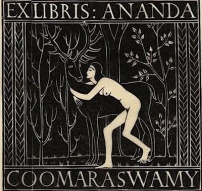 The amount paid suggests that the books were viewed as very valuable: Rs 75K in the late 1960’s was a huge sum of money. And given that, it was quite amazing that the collection had not been kept as one, but the books had apparently been shelved by subject (!) and were then like any other books, and so subject to the periodic culling that most libraries undertake to clear shelves and make space for new books. (In some sense I was not too surprised, having myself bought a book that had been owned by AnandaKentish Coomaraswamy and that had somehow made its way to Princeton. The initials AKC were pencilled in on the first page, but apart from the bookplate, there was little else to show that it had been his. Unfortunately that book is no longer with me, and in hindsight, I think that when libraries acquire collections from scholars of note, they should make some attempt to keep the collections intact. Mercifully the JNU has done that now with more recent acquisitions..).
 Nevertheless, a chance conversation shortly thereafter on the vagaries of libraries and the nature of intellectual inheritances started me off on my exploration of Kosambi and his mathematics. The idea was, on the face of, a simple one. What was the extent of Kosambi’s mathematical contributions compared to, say, his contributions to history or numismatics. How would the math stack up? Having been in TIFR before I came to JNU, I had also heard of how he travelled from Pune to Bombay every day on the Deccan Queen, how he was fired from TIFR, etc. etc. But I also found out that precious little was known of DDK’s other life by the historians. That the mathematics was too different and far too difficult is all too true, but still.
 To start with, I thought it would be good to put together his life mathematical, namely all his math and stats papers. Much of that was on the web, except that it was in bits and pieces, and all over the place. No single bibliography was accurate, and no matter where I looked, there were gaps. Many of the Indian journals where he published were not (and still are not) digitized. Some of the names that were given in the existing lists were incomplete or incorrect, many papers were missing. The Rendiconti della Reale Accademia Nazionale dei Lincei or the Sitzungsberichten der Preussische Akademie der Wissenschaften, Physikalisch-mathematische klassewere both uncommon journals that were impossible to locate anywhere in India, for instance. I went to the Ramanujan Institute in Chennai in late 2009, looking for copies of the Journal of the Indian Mathematical Society and Mathematics Student where DDK had published a lot of his work in the 1930’s and 1940’s. It’s too depressing to recount that visit… Nothing could be located, and I left empty-handed after a wasted morning.
 In 2010, though, I was visiting professor at the University of Tokyo for a month, and luckily, the Komaba campus where I was located, housed the mathematics department and more importantly, its library. It took a few hours spread out over several days, but before long, I not only had the bulk of DDK’s papers in photocopy or in digital form, but I also discovered, via MathSciNet, of DDK’s nom de plume S. Ducray, under which name he had written four papers. I also had access to the reviews of many of his mathematical papers by others, and could see many very famous names among the reviewers. As an aside, I should add that the library of Tokyo University is one of the few that have the complete sets of Journal of the Indian Mathematical Society and Mathematics Student, including the volumes published during the World War II years, when Japan and India were on different sides…


